


Video can be a powerful medium for conveying the value of your health research, especially if you want to attract attention on a social media platform. Whether you're creating a video featuring real people or animations, the key is to turn your research into a compelling story that speaks to your Impact Audience.
Below you'll find a few tips for crafting succinct, engaging scripts for a variety of formats, whether you're producing the video yourself or working with a creative partner, such as a videographer or animator. You'll also a find a few hints for conducting unscripted interviews with subject matter experts and turning those into short, engaging videos.
Pointers for scripting
Videos offer a great way to bring research to life because they give viewers the chance to meet the human being behind the methodology and data. However, there’s more to storytelling than simply profiling the researcher as a character. Your aim should be to create a drama of discovery.
To do that, you’ll need to help the expert share information that they may not necessarily think to provide. (This applies whether you’re interviewing someone else or doing a self-interview.) You’ll need to sharpen your questioning skills to excavate the story beneath the science.
Here are some tips to help you prepare for, conduct, and edit an interview with a researcher so that your end result is a compelling story about two to three minutes long. This story will be told by the researcher with your help, but your face and voice will not appear in the video.
Note: These tips assume that you’re working with a videographer and/or video editor who will carry out the technical aspects of the interview.
Preparing for the interview
From the interviewee’s perspective, a great interview flows naturally and easily. But from the interviewer’s perspective, it takes a lot of preparation to make “natural” happen.
- Gather as much background information as you can
Use both academic and general sources to gain insight into both the scholar and the scholarship. Check out as many of the following items as you can find:
- Official bio on the university website
- CV
- LinkedIn profile
- Teaching dossier or sample syllabi
- Personal blog
- Recent academic publications
- Op-eds
- Recent conference presentations
- Media coverage
- Coverage on university website and in alumni magazine
- YouTube, Facebook, and Instagram accounts

- Take some preliminary notes to help you shape your interview script
Include:
- List of key themes and findings from the research
- Career highlights to date (keep an eye out for interesting or unusual achievements, such as completing a degree in both Finnish and English, earning a prestigious prize, or working with a research team that spans three continents)
- Interesting personal facts about the researcher. (For example, do they parasail in their spare time? Do they write romance novels under a pseudonym? Were they the first person in their family to travel outside their home town?)
- Points the researcher has in common with your target audience
- Hypotheses about what drives the researcher to pursue their research
- Draft an interview script
For a two- to three-minute video, you’ll want to shoot about 20 to 30 minutes of video. Think of that time as divided into thirds:
- A third of the time to help the interviewee relax into the conversation
- A third of the time to ask pre-scripted questions
- A third of the time to ask unscripted questions
With these guidelines in mind, draft a script consisting of five to seven questions, plus notes to help you open and close the conversation. (Download a sample interview script.)
The ideal script has a clear structure, working from general opening questions to more specific closing questions. Because you’re trying to uncover the story in the research, a chronological approach can work well; you can start with questions about the history of the research and close with a forward-looking view. Focus your questions on the real-world problem the research attempts to solve and the journey toward findings that will make an impact outside the library or lab. (The questions in the sample interview script can be adapted to many different situations.)

Despite its logical structure, the ideal script also allows for flexibility. That’s why it includes only five to seven questions. Once the researcher has responded to a question, you’ll probably think of a follow-up, or probing, question you’d like to explore. Keep your script loose enough to allow you to follow your curiosity.
At the time of the interview, you may feel a bit nervous. (Lights and cameras can have that effect on a person.) So you may also want to include in your script any opening and closing comments you want to share with the interviewee. For example:
- Opening comments to put the researcher at ease and explain the interview process (see sample script for an example)
- Closing comments to thank the researcher and explain next steps (the editing and review process)
Many interviewees appreciate receiving the script beforehand so they too can prepare for the conversation. If possible, give the researcher the chance to familiarize themselves with the questions and suggest other or alternative questions they’d like to discuss.
- Touch base with the interviewee
Even if the researcher has given other interviews, it’s important to orient them to the way you do things. That way, there are no surprises on the set!
A week or so before the interview, send the researcher an email in which you:
- Thank the researcher for participating in the interview
- Confirm the date, time, and location of the interview
- Provide wardrobe tips (e.g., indicate whether formal or business casual dress is suitable, recommend a solid-color top, warn against wearing stripes or plaids)
- Share the interview script
In some cases, you may also need to ask the researcher to sign a media release form, granting you permission to record and publish the video. Your university or employer should have a standard form you can use.

Conducting the interview
On the day of the interview, your number one job is to help the researcher relax. Most people find it disorienting to find themselves staring into a camera lens, so your role is to help your interview subject forget all about the camera.
- Setting the stage
Position yourself behind or close to the camera, but outside the video frame, so that the interviewee can look at you and feel like they’re simply engaging in a friendly conversation. (Don’t worry if the researcher is looking directly into the lens; in many situations, the video looks more natural if the camera captures the subject from a slightly indirect angle.)
Allow plenty of time for the interviewee to settle into position, adjust their wardrobe, and do a sound test. Again, your number one concern is to help them feel comfortable.
- Guiding the conversation
Once everyone is ready, start working your way through the interview script. When the researcher responds to a question, provide positive nonverbal feedback: smile, nod, lean forward. But repress your urge to vocalize any kind of response. A well-intended “mmm-hmmm” or “I see” can spoil an otherwise good clip.
Here are a few tips to help you handle specific situations and ask probing questions:
- If the researcher stumbles a bit during a response, that’s OK—small hitches in delivery make them appear human and relatable. But if they ramble or deliver a response that’s hard to follow, invite them to try re-expressing their idea. (You might say something like this: “What an intriguing idea! I think our audience would be really interested in that thought. Do you think you could try saying it again in a way that’s a little tighter?”)

- If the researcher veers off track in answering a question, feel free to gently guide them back to the topic. Also feel free to gently prompt them to express an idea in a way that you think will appeal to the target audience. For example, you might paraphrase something the researcher has said, using an analogy your audience can easily relate to. The researcher can then reject the analogy and offer one of their own, or they might grab hold of the analogy and express it in their own way.
- If the researcher is sticking to impersonal “facts,” ask probing questions to engage them and invite an emotional response. You might, for example, ask how they felt when they reached an impasse in their research or make a certain breakthrough. You might also ask “why” questions that get them reflecting on what motivates them to pursue their research and the potential positive impact it can have on the world outside the academy.
- If the researcher is nervous and delivering stiff responses, try some gentle humor—even if it takes you slightly off-topic—to bring out their humanity. Amp up the nonverbal feedback you’re providing; smile and they will likely smile back. Try paraphrasing what they’ve just said, using casual language. That might cue them to relax their language too.
- If the researcher is relaying abstract concepts, give them some help finding more concrete language. Invite them to imagine themselves having a conversation with someone from their target audience. (“So, if you were explaining this new therapy to the mother of a child with Down’s Syndrome, how would you explain its benefits?”) You might also ask them if they can think of an example or a story to illustrate a certain concept.
As you conduct the interview, keep one eye on your script and one eye on the clock. Pace yourself so that you have time to get to all the questions, especially the questions toward the end of the script, which are meant to elicit in-depth responses.
Be sure to open and close the interview with a genuine thank-you. And let the researcher know what to expect from the editing and review process.
Editing the interview
You’ve collected the raw ingredients for a research story. Now, it’s time to sift through them, choose the most interesting elements, and compose the drama.
Review the raw footage. (If you have access to a tool for generating transcripts, you might also work from the transcript.) Identify short clips that, together, create a cohesive narrative about why the research matters to your target audience. (The best way to keep track of the clips is to record the timestamp for the start and end of each clip.)
Look for answers to “why” questions and for examples (short stories in themselves). You may or may not find that these titdbits appear in sequence or in each section of the interview. Feel free to rearrange the video content to tell a compelling story.
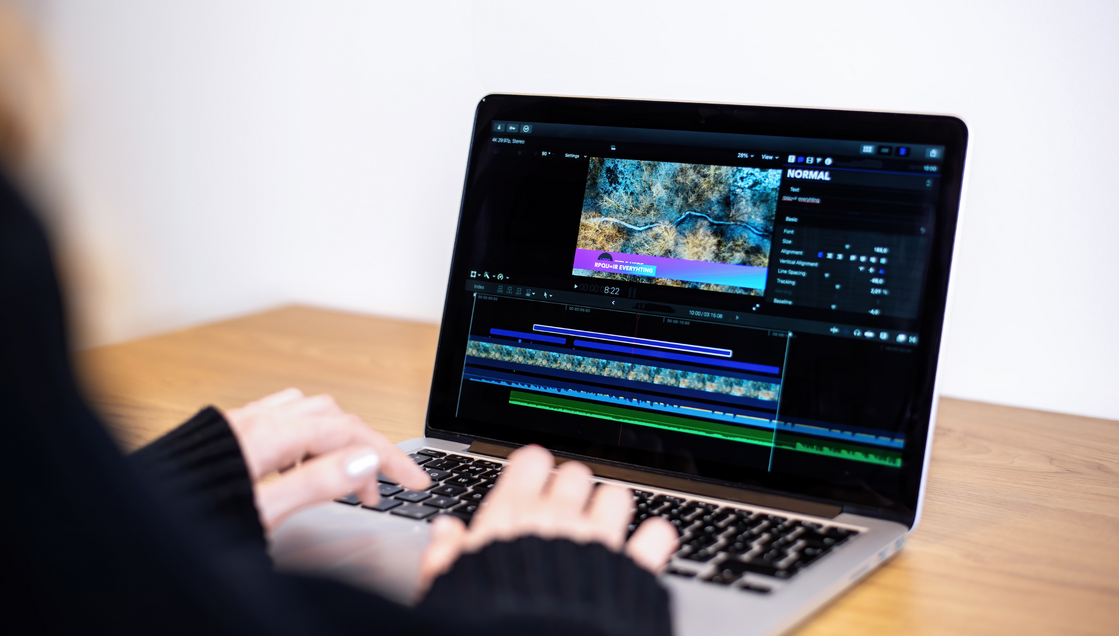
As you consider how best to choose and arrange your video content, consider how you can showcase the following elements of a strong research story:
- People—Look for clips that show the researcher relaxed, smiling, and enthusiastic. Also look for clips that address the people the research will help.
- Problem—Look for a clear statement of the problem the researcher set out to solve. This should be a problem relating to the “real world” of the target audience (e.g., finding new treatments for anxiety in adolescents, not redefining the medical diagnostic criteria for generalized anxiety disorder and panic disorders).
- Eureka moment—Look for a clear, succinct statement of a key research finding. A significant failure in the research journey can also qualify as a Eureka moment.
- Examples—Look for clips that start with “For example…,” “In one situation…,” or similar expressions pointing to a specific illustration.
- Potential impact—Look for content that shows the potential of the research to solve the identified problem as well as its potential to address other problems. Whet the audience’s appetite for a sequel research story.
A skilled video editor will take your suggested clips and weave them together, adding their own artistic flair. Depending on the budget, they may also integrate some B-roll footage, supplemental footage they have shot on site or taken from stock footage. (Examples of B-roll could include the researcher studying at their desk, working in the lab, or working with the community, or it could include stock footage to emphasize a certain theme.)
Once the video has been edited, it’s common courtesy to share it with the researcher and get their approval before releasing the content publicly.
Download the sample video script
Video tour of a creative brief for an animated video
If you're working with an animator, the best way to start your collaboration is to give them a rough outline of your vision for the video, through a document called a creative brief. An agency may ask you to work with a briefing template they provide, but in most situations, the simple format shown in the video below is all you need to kickstart the creative process.
- Building the perfect interview script
- A Beginner's Guide to Script Writing for Animated Videos
- KT Stories: Knowledge translation on a global video (video of a nurse talking about her experience in KT)
Downloadable tools
Try this!
Pick one aspect of your current research that you'd like your Impact Audience to understand and value. Create a script for a three-minute video that grabs their attention and persuades them to adopt your point of view and/or take action.
 Please log in or register to post a comment